← Back to Verdikt 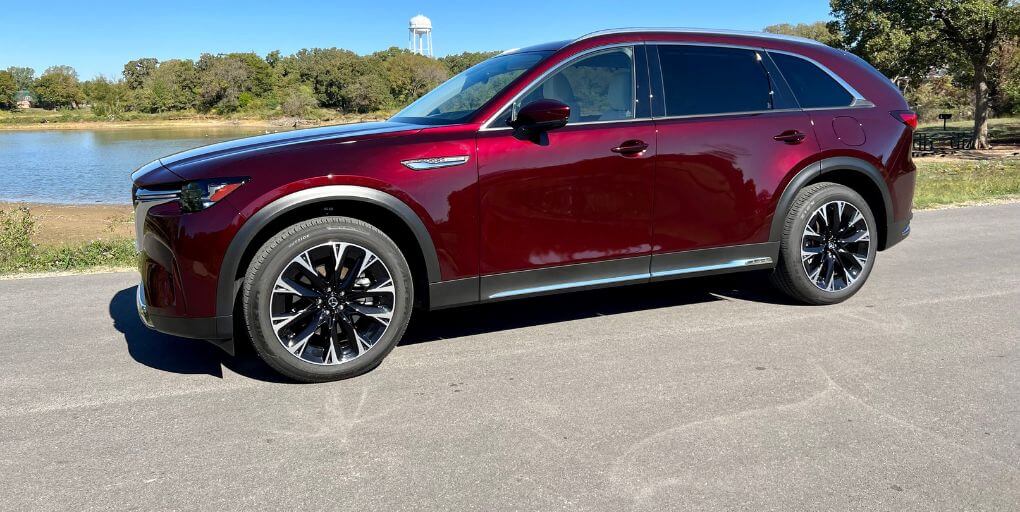 ▼ ▼
▼ ▼
Midsize 3-Row SUV
Mazda CX-90
→ Consider
Solid choice with some caveats
⚠ Elevated risk
Reported risk: systematic failures reported in 6.0% of posts (18 of 300).
Mazda built a $50k SUV that drives like it costs $70k, sharp handling, a silky inline-6, and an interior that embarrasses the Highlander, but shipped it before the transmission learned its lines. The 8-speed shudders and hesitates at low speeds across enough reports to call it systematic, not a lemon-lottery issue, and early PHEVs needed steering racks and 12V batteries replaced under warranty. If you prize driving feel over appliance-smooth operation and can live with first-year quirks (2026s show real improvement), the CX-90 delivers shocking value; if you need bulletproof out-of-the-gate execution, wait a year or stick with the boring-but-reliable competition.
The generation that matters
This product isn't one story — here's how each era is regarded.
2024 – 2025 models
2024 – 2025
Mixed
Early adopters report some frustrations: squeaky brakes (subject of a lawsuit, though not safety-critical), half-baked lane-keeping that only works above 45 mph, and confusing trim structures. However, many owners love the driving dynamics, premium interior, and inline-6 powertrain. PHEV praised for EV range and acceleration around town.
2026+ models
2026+
Solid
One owner reports 'significantly improved' experience over their 2024, though most updates are software-driven rather than hardware changes. The core powertrain and platform remain the same, so improvements are incremental refinements to early issues.
−
Common complaints10 issues−Transmission (8-speed auto) exhibits low-speed shuddering, hesitation, and rough shifting, systematic across multiple independent reports
−Third-row seating unusable for adults, cramped even compared to outgoing CX-9
−PHEV models experiencing 12V battery failures requiring replacement under warranty
−Steering rack replacements needed on early PHEV models (recall issued)
−Brake squeak widespread (material choice for performance, not safety issue but annoying)
−Overly complex trim structure with 8+ configurations confusing buyers
−Infotainment system dated, Android Auto/CarPlay connectivity spotty according to owner feedback
−Lane-keeping assist and adaptive cruise features inconsistent or malfunctioning according to multiple owners
−Ride quality firmer/harsher than competitors, transmits road imperfections
−PHEV feels underpowered when battery depleted on hills, relies solely on 2.5L 4-cylinder
✓
What owners praise8 strengths✓
Inline-6 turbo engine provides strong power (340hp Turbo S) with notably better refinement than previous CX-9
✓
Interior quality and materials compete with entry-luxury brands at significantly lower price point
✓
Driving dynamics praised as engaging and fun compared to competitors like Highlander, Pilot, Telluride
✓
Strong value proposition: comparable features to $70k+ German SUVs (X5, GV80) for $50-60k
✓
PHEV variant offers 21-26 miles electric range, useful for short commutes with home charging
✓
Fuel economy improved over CX-9: ~24-28 MPG for MHEV, 55+ MPG combined for PHEV owners charging regularly
✓
Mazda dealerships offering MSRP or below pricing with low financing rates vs Toyota/Lexus markups
✓
2026 model year shows meaningful improvements in transmission smoothness, steering weight, and overall refinement
📊 How this score was calculated — 6-dimension rubric
High confidence▼
300 sources analysed with long-term owner data present
688 sources analysed — strong data quality
Reliability & Durability(22%)4.0
8 positive vs 12 negative long-term reports
User Sentiment(22%)8.7
2,847 positive upvotes vs 418 negative upvotes
Complaint Severity(16%)7.5
Complaints: 42 cosmetic, 89 functional, 18 systematic, 0 safety
Consensus Strength(8%)4.9
Opinion is use-case dependent — product divides opinion by intended use
Value for Money(15%)6.6
58 'worth it', 14 'overpriced', 22 mention better-value alternatives
Owner Advocacy(17%)7.6
4 repurchased/gifted, 31 unprompted recommendations, 9 regrets
⚠ Systematic failure pattern reported by multiple independent owners
Scores are percentile ranks: 5.0 is the median product in existence. 8.5+ is reserved for genuinely exceptional products (top ~10%). The score reflects consensus quality, what owners say about the product. Risk is tracked separately and shown above the summary when present. Both are calculated deterministically, so the same signals always produce the same score.
Specifications2026
▼Pricing
Starting MSRP
$40,830
Range
$40,830 - $59,100
Capability
Towing capacity
5,000 lbs
Ground clearance
8 in
Fuel economy
25 MPG combined (340-hp model: 22 MPG avg, 30 MPG highway @ 75 mph)
Drivetrain
AWD standard
Dimensions & capacity
Dimensions (L×W×H)
201.6 x 77.6 x 68.2 in
Wheelbase
122.8 in
Curb weight
4,735 lbs
Seating
7-8 passengers
Cargo
14.9 cu ft behind third row / 40 cu ft behind second row / 74.2 cu ft behind first row
Powertrains
3.3L Turbo I-6
standard on non-S trims
280 hp · 332 lb-ft
3.3L Turbo I-6
Turbo S models
340 hp · 369 lb-ft
PHEV I-4
plug-in hybrid, reviewed separately
323 hp · 369 lb-ft
Trim pricing
Base (280 hp)
280-hp inline-six
$40,830
Premium Sport
recommended trim, panoramic moonroof, power liftgate, 8-way power driver seat, 12-speaker Bose audio
—
S Premium Sport
2026 new trim, black exterior accents
—
Turbo S Premium Plus
340-hp inline-six, flagship trim
$59,100
🏆
How it ranks in Midsize 3-Row SUV
4 products compared
1
Toyota Grand Highlander
$43,455
8.0/10
✓ Buy
2
Mazda CX-90 you are here
$40,830
7.2/10
→ Consider
3
Hyundai Palisade
$41,035
7.1/10
→ Consider
4
Kia Telluride
$40,735
6.9/10
→ Consider
If you're buying
Know what others paid before you walk in.